



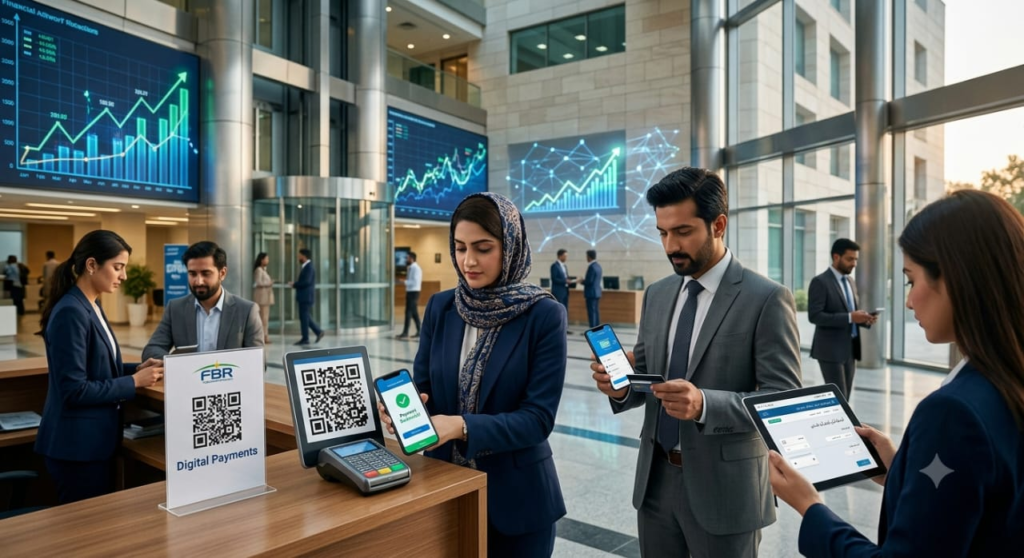
ISLAMABAD (Special Report) — July 26, 2026 — In a decisive effort to fortify national economic stability and broaden the tax footprint, the Government of Pakistan has significantly accelerated comprehensive structural reforms within the Federal Board of Revenue (FBR) alongside an aggressive push toward a fully cashless economy. The dual initiative represents a transformative leap from legacy paper-based operations toward an agile, tech-driven fiscal infrastructure designed to curb the informal economy.
Executive Summary & Key Takeaways
- FBR Modernization: Federal Board of Revenue pivots toward complete digital automation, aiming to eliminate tax evasion and improve systemic transparency.
- Cashless Ecosystem: Expansion of digital payment corridors promises safer transactions for consumers and simplified tax compliance for businesses.
- Economic Outlook: Financial experts anticipate heightened investor confidence, structural documentation, and sustainable economic momentum.
Digital Modernization and Tax Transparency
Unveiling the strategy, Finance Minister Muhammad Aurangzeb emphasized that the government’s core objective centers on building a modern, tech-enabled tax administration. By minimizing direct human intervention, the reforms intend to systematically dismantle corruption, prevent harassment, and eliminate tax evasion.
“Our objective is to modernize the tax system, improve transparency, reduce tax evasion, and encourage digital financial transactions across every layer of the economy.”
— Muhammad Aurangzeb, Federal Minister for FinanceAccording to senior ministry officials, automated data-matching systems and digital audit trails will enable tax authorities to effectively track under-reported revenue streams while offering a seamless experience for compliant taxpayers.
Empowering Consumers and Businesses
The rapid adoption of digital financial services—ranging from instant payment gateways like Raast to mobile wallets and card processing—is poised to deliver tangible benefits across the marketplace:
- For Consumers: Safer and faster financial services, eliminating personal security risks associated with carrying cash.
- For Merchants & Businesses: Streamlined financial record-keeping, automated sales tracking, and simplified annual tax return processes.
- For the National Economy: Enhanced documented revenue, reduced currency-in-circulation, and elevated fiscal discipline.
Expert Opinions and Long-Term Prospects
Leading economic experts and market analysts have welcomed the accelerated roadmap, noting that a documented economy is an indispensable prerequisite for sustainable economic growth. The widespread integration of digital payments is expected to bolster foreign direct investment (FDI), strengthen Pakistan’s fiscal standing, and unlock fresh development avenues.
The Path Ahead
As Pakistan navigates this pivotal financial transition, consistent implementation and stakeholder participation will remain critical. The convergence of FBR digital reforms and cashless financial infrastructure marks a milestone step toward bringing Pakistan’s economic architecture in line with international standards.